
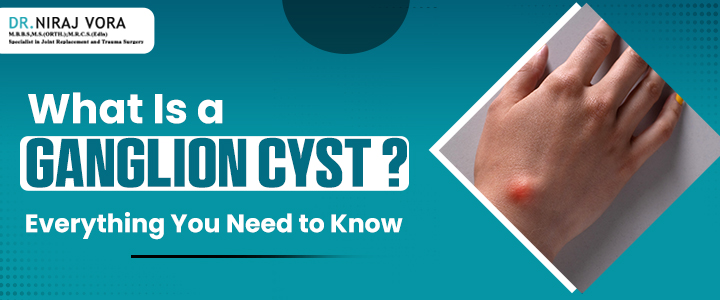
Have you ever noticed a small lump near your knee and wondered if it is something serious? Many people ignore it because it does not hurt at first. Others become worried the moment they discover it. The truth is that not every lump is dangerous, but every unusual swelling deserves proper attention. One condition that often raises questions is a ganglion cyst.
A ganglion cyst is commonly linked with the wrist, but it can also develop around the knee. Learning what it is, why it appears, and when it needs treatment can help you make the right decision for your health.
What Is a Ganglion Cyst?
A ganglion cyst is a fluid-filled sac that develops near a joint or tendon. It contains a thick, jelly-like fluid that is similar to the natural fluid found inside your joints. While these cysts are not cancerous, they can become uncomfortable if they grow larger or press against nearby tissues.
A ganglion cyst in the knee may appear around the front, back, or side of the joint. Some people notice it while bending their knee, whereas others discover it during a routine examination. The size of the cyst may remain the same or change over time.
What Causes a Ganglion Cyst?
Doctors do not always know the exact reason behind a ganglion cyst. In many cases, repeated stress on a joint, previous injuries, or wear and tear may play a part. People who regularly place pressure on their knees through sports or physically demanding activities may have a greater chance of developing one.
Age can also be a factor, although a ganglion cyst can affect adults of different age groups.
Common Symptoms to Watch For
Some ganglion cysts cause no symptoms at all. They are discovered only during scans or physical examinations. Others may create noticeable discomfort depending on their size and location.
Common symptoms include:
- A visible or palpable lump around the knee.
- Mild or persistent pain while walking.
- Stiffness during movement.
- A feeling of pressure around the joint.
- Reduced range of motion if the cyst becomes larger.
If these symptoms continue or become worse, medical evaluation is recommended.
How Is It Diagnosed?
Diagnosis usually begins with a physical examination. Your doctor will examine the swelling and ask about your symptoms. Imaging tests such as ultrasound or MRI may be suggested to confirm the diagnosis and rule out other conditions affecting the knee.
Since several conditions can produce similar symptoms, getting an accurate diagnosis is always the safest approach.
Does Every Ganglion Cyst Need Treatment?
The answer depends on your symptoms. Small cysts that do not cause pain may simply be monitored during follow-up visits. If the cyst becomes painful, affects movement, or keeps returning, treatment may become necessary.
In some situations, your doctor may recommend aspiration, where the fluid is drained from the cyst. If the cyst continues to recur or causes ongoing discomfort, ganglion cyst surgery may be advised to remove it completely.
People who already have arthritis or severe joint damage may also require separate treatment plans, including knee pain surgery, depending on the underlying condition.
Why Expert Care Matters
Every knee problem is different. A ganglion cyst may appear simple, but the correct treatment depends on its location, size, and whether another joint condition is present. This is why consulting an experienced specialist is always the right step.
If you are searching for the best knee surgeon in Mumbai, top knee surgeons in Mumbai, or a trusted knee replacement surgeon in Mumbai, choosing a specialist with extensive experience can help you receive an accurate diagnosis and the most suitable treatment plan. Dr. Niraj L. Vora combines years of experience with advanced surgical techniques to help patients regain comfort, movement, and confidence in their daily lives.